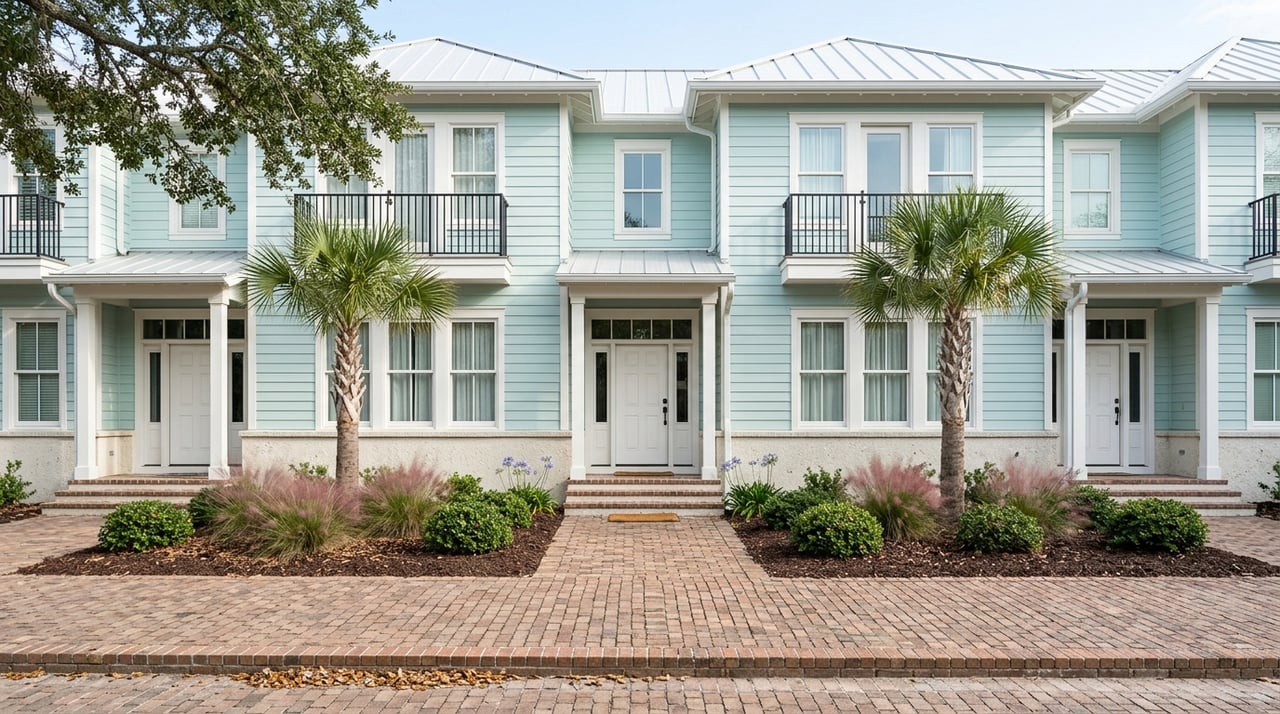
If you are thinking about buying a townhome in Mount Pleasant, you are probably weighing one big question: will it actually make your life easier? For many buyers, the appeal is simple. You may get lower-maintenance living, shared amenities, and a more lock-and-leave setup than a detached home. At the same time, townhome living comes with fees, rules, and ownership details that are important to understand before you buy. Here is what you can realistically expect from townhome living in Mount Pleasant, and how to evaluate your options with confidence.
Townhome ownership is not always the same
One of the most important things to know is that attached-home ownership in Mount Pleasant is not one-size-fits-all. Some properties are set up as condominium regimes under South Carolina’s Horizontal Property Act. Others are fee-simple townhomes in an HOA, and some are part of mixed planned communities.
That difference matters because it affects what you own, what the association maintains, and how the fees work. In a condo-style setup, you typically own your individual unit while sharing ownership or use of common elements. In other communities, you may own the townhome and lot more directly but still share responsibility for common areas and neighborhood systems.
Before you compare one property to another, make sure you know the legal structure. A lower fee in one community does not automatically mean a better value if the association covers less. A higher fee may reflect more maintenance, more amenities, or more shared infrastructure.
What you usually own
In many attached-home communities, you will own the interior living space of your home and have access to common or limited common elements. Common elements can include things like grounds, shared buildings, ponds, or amenities. Limited common elements may be reserved for certain owners, such as specific parking areas or exterior features tied to a particular home.
This is why recorded community documents matter so much. Buyers should review the declaration or master deed, bylaws, plans, rules, and any architectural review requirements. These documents help explain what belongs to you, what belongs to the association, and what changes need approval.
HOA and regime fees can vary widely
Mount Pleasant offers a wide spread of HOA and regime fee structures. Some communities have very light annual fees. Others have monthly dues that cover a much broader list of services and shared costs.
For example, Shellpoint lists an HOA fee of $250 per year. That covers landscaping, entrance lighting, signs, and property management. Heritage Village lists a $270 monthly regime fee that covers landscaping, lighting, HOA insurance, exterior upkeep, amenities, legal and accounting, and management fees. Oyster Point lists a $1,750 annual fee, plus a transfer fee and a capital contribution, which reflects a much larger amenity package.
The takeaway is simple: do not judge a community by the fee amount alone. Instead, ask what the fee actually pays for and whether that matches the lifestyle and maintenance level you want.
What your dues may cover
Depending on the community, your dues may help pay for:
- Landscaping and grounds care
- Exterior building maintenance or upkeep
- Pool, clubhouse, court, dock, trail, or fitness area maintenance
- Property management and administrative costs
- Legal or accounting services for the association
- Shared insurance in some condo-style communities
- Maintenance of ponds, drainage systems, and other common infrastructure
In Mount Pleasant, that last point deserves extra attention. The Town states that stormwater BMPs and ponds in HOA communities are the association’s responsibility, not the Town’s. The Town’s LID program also applies to multi-family residential projects, HOA amenity centers, and recreational facilities. In practical terms, part of your dues may support inspections, drainage upkeep, and shared systems that are easy to overlook during a first showing.
Low maintenance comes with tradeoffs
For many buyers, the biggest benefit of townhome living in Mount Pleasant is convenience. Exterior upkeep, landscaping, and amenity maintenance are often handled by the association. That can be especially appealing if you want a primary home with less day-to-day work or a second home that is easier to leave for stretches of time.
The tradeoff is reduced autonomy. You are still part of a shared community, which means shared rules, recurring dues, and limits on certain types of use. Depending on the neighborhood, those rules may affect rentals, parking, boats, trailers, pets, or exterior changes.
A low-fee community can still have firm rules. Shellpoint, for example, has specific rules on boat parking and lake use. Bay Club Sea Lofts does not allow short-term rentals and keeps owner documents like bylaws, rules, the master deed, and ARB applications available to owners. Those examples show why it is smart to look beyond photos and floor plans.
Mount Pleasant examples show the range
Heritage Village
Heritage Village Townhomes is an older, compact community off Mathis Ferry Road built around a pond on about 6.5 acres. The homes were originally built in 1974 and include 2- and 3-bedroom plans. Amenities listed by the community include a clubhouse, enclosed pool with kiddie pool, tennis and basketball courts, a fishing lake, and limited boat storage.
This is a useful example of a townhome community where the monthly fee supports both exterior and amenity-related costs. If you like the idea of shared recreation without managing it yourself, this type of setup may feel appealing.
Oyster Point
Oyster Point shows the other end of the spectrum. It is a large planned community with more than 540 residences, including duplex-condos, townhouses, and detached homes. Its amenities include a meeting and events hall, social pavilion, Olympic-style pool with cabanas, tennis, basketball, and pickleball courts, a kayak launch, creek dock, fitness center, fishing ponds, and more than 3 miles of walking trails.
This kind of community can offer a more expansive lifestyle package, but buyers should also plan for added costs beyond standard annual dues. Oyster Point lists a transfer fee and a capital contribution equal to 0.5% of the purchase price, which is an important reminder to ask about one-time costs before closing.
Bay Club Sea Lofts
Bay Club Sea Lofts is a condo community near the Coleman Boulevard and Ben Sawyer corridor, close to Old Village and within a short bike ride or drive of Sullivan’s Island. The community highlights access to the beach, Shem Creek, the Ravenel Bridge, and downtown Charleston. Amenities include a pool, clubhouse, fitness room, tennis and pickleball courts, dog park, bike storage, boat parking, and professional management.
This community is also a strong reminder that lifestyle access and ownership rules often go hand in hand. Bay Club does not allow short-term rentals, and owners can access documents such as the bylaws, master deed, rules, and ARB materials.
The Towns at Carolina Park
The Towns at Carolina Park reflects a newer wave of attached-home living in Mount Pleasant. This 2026 project includes 3-bedroom townhomes and community amenities such as a playground and hammock garden. It also shows that new townhome options may be part of larger planned communities rather than stand-alone infill developments.
For buyers who want newer construction, this matters because the townhome itself is only one part of the decision. You also need to understand the broader community structure, ongoing dues, and shared spaces that come with it.
Shellpoint
Shellpoint is a helpful contrast because it has no shared amenities to fund, which keeps the HOA fee low at $250 per year. The fee covers landscaping, entrance maintenance, street lights, signs, and property management. Even without major amenities, the community still has operating needs and rules.
This is a good example of how a low-fee HOA can still offer a tidy, managed environment without the expense of a larger amenity package. If you prefer simpler ownership with fewer bundled extras, this kind of setup may be worth considering.
Questions to ask before you buy
Before you move forward on a Mount Pleasant townhome, it helps to get very specific. Here are some of the most important questions to ask:
- Is the property a condo regime, a fee-simple townhome, or part of a mixed PUD or HOA community?
- What exactly do the dues cover, and how often are they billed?
- Are there transfer fees, capital contributions, or possible special assessments?
- Which exterior components are maintained by the association, and which are your responsibility?
- What are the rules on rentals, parking, boats, trailers, pets, and exterior modifications?
- Are there ponds, drainage features, docks, or other shared systems that require ongoing maintenance?
These details shape both your monthly budget and your day-to-day ownership experience. They also help you compare communities more accurately.
Is a Mount Pleasant townhome right for you?
Townhome living in Mount Pleasant can be a strong fit if you want convenience, shared amenities, and a more managed ownership experience. It can also make sense if you prefer to spend less time on exterior upkeep and more time enjoying the surrounding coastal lifestyle. That said, the best fit depends on how comfortable you are with fees, rules, and shared responsibility.
The key is to evaluate each community on its own terms. Ownership structure, association documents, fee coverage, and neighborhood rules all play a role. When you understand those pieces clearly, you can buy with fewer surprises and much more confidence.
If you are considering a townhome in Mount Pleasant and want help comparing communities, dues, and ownership structures, The Tipple Team is here to offer clear, local guidance tailored to your goals.
FAQs
What does townhome ownership in Mount Pleasant usually include?
- In many Mount Pleasant attached-home communities, you own your individual unit or interior living space while sharing responsibility for common elements such as grounds, amenities, or certain building components.
What do HOA or regime fees in Mount Pleasant townhome communities cover?
- Fees may cover landscaping, exterior upkeep, amenities, management, administrative costs, shared insurance in some communities, and maintenance of shared infrastructure like ponds or drainage systems.
Are all Mount Pleasant townhomes part of a condo regime?
- No. Some are set up as condominium regimes, some are fee-simple townhomes in an HOA, and some are part of mixed planned communities, so buyers should verify the structure before comparing properties.
What rules should buyers check in a Mount Pleasant townhome community?
- You should review rules related to rentals, parking, boats or trailers, pets, and exterior changes, along with any architectural review process required by the association.
Why can townhome fees in Mount Pleasant vary so much?
- Fees vary because communities maintain different levels of amenities, exterior services, management, insurance, and shared infrastructure, so the amount only makes sense when you look at what is included.
Do low HOA fees in Mount Pleasant mean fewer community rules?
- Not necessarily. A lower-fee community may have fewer amenities, but it can still have clear rules on things like parking, lake use, or exterior standards.