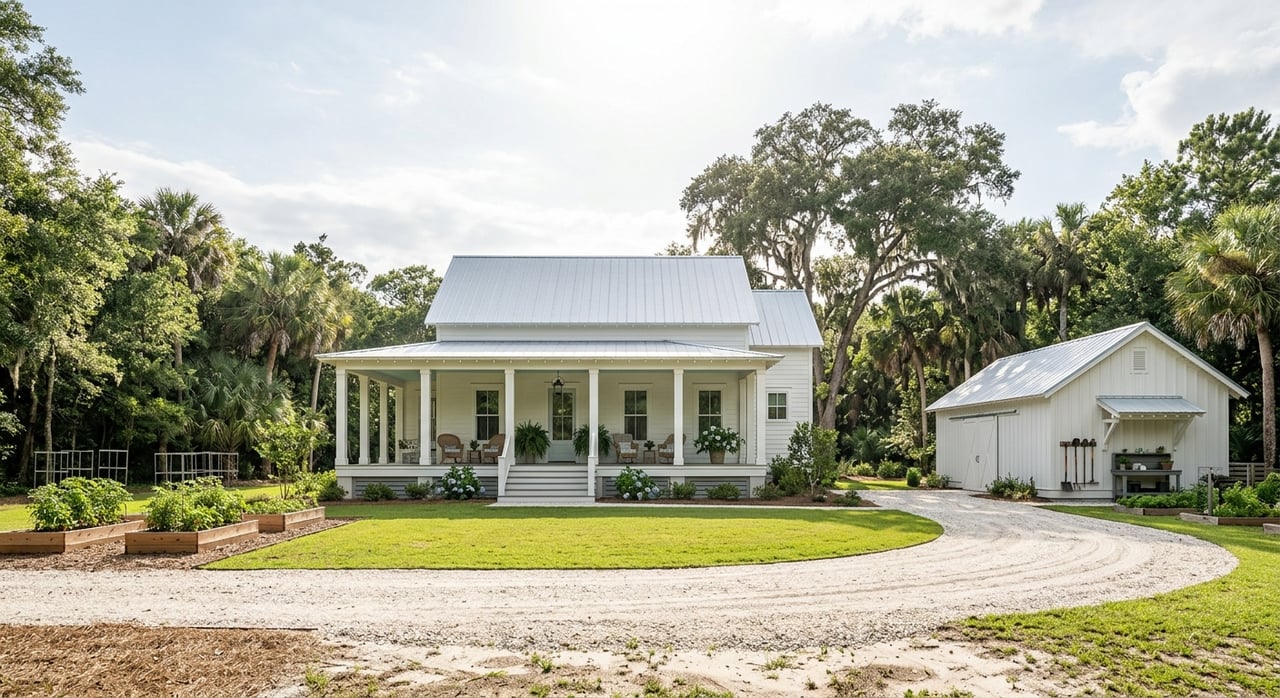
Dreaming about a few acres on Johns Island? It is easy to picture wide-open space, a garden, maybe a barn or workshop, and room to breathe just minutes from Charleston and the beaches. But acreage living here is not just about buying more land. It is about understanding what that land can actually do for you, what it will require from you, and how Johns Island’s rural character shapes daily life. If you are considering a larger parcel, this guide will help you see the opportunity and the tradeoffs more clearly. Let’s dive in.
Johns Island acreage is not one-size-fits-all
Acreage on Johns Island can look similar on paper while living very differently in real life. Two parcels may both list five, eight, or ten acres, but their usable space, access, and development options can vary quite a bit.
A big reason is zoning. Much of unincorporated Johns Island falls under Charleston County rules, and the county’s AG-8 district is designed for rural agricultural land. In AG-8, the standard is one principal dwelling unit per eight acres, along with minimum lot width, setback, and height rules. Some properties may fall under AGR zoning, which is also rural but allows denser residential development.
That means your first question should not be, “How many acres is it?” It should be, “How much of this acreage is actually usable for the way I want to live?”
Buildable land matters more than total acreage
This is where many buyers get surprised. Listed acreage is not always the same as buildable acreage, and on Johns Island that distinction can be significant.
Wetlands, waterways, and critical-line setbacks can reduce the practical homesite on a parcel. The research report points to a major local example: the Kiawah River project spans 1,427 acres, but 187 acres are freshwater wetlands and 157 acres are critical-line area. That is a useful reminder that environmental constraints can reshape what looks possible on a survey or listing sheet.
South Carolina’s environmental guidance also advises buyers to watch for flooding, wet soils, wetlands, steep slopes, bedrock, and fill dirt before they buy. On Johns Island, this is one reason acreage often feels less like a simple home purchase and more like a land-planning decision.
What acreage living can support
For many buyers, the appeal of Johns Island acreage is the flexibility. On the right parcel, you may be able to create a lifestyle that feels hard to find in a typical neighborhood lot.
Charleston County’s agricultural use table allows a range of activities that can include crop production, horticultural production, greenhouse production, apiculture, horse or other animal production, agricultural sales and services, and roadside stands. The county tax office also recognizes bona fide agricultural use for tracts used to raise or store crops or manage livestock, trees, fowl, or animals useful to people.
In practical terms, that can make uses like these possible on the right property:
- Large gardens
- Orchards
- Beekeeping
- Small-scale livestock or fowl where allowed
- Greenhouses
- Barns, sheds, and garages
The key phrase is on the right property. Zoning, parcel conditions, and any added review requirements still matter.
Outbuildings can be part of the plan
Acreage buyers often want more than just a house. They may also want a workshop, equipment storage, a detached garage, or room for hobby-farm support structures.
Charleston County treats barns, garages, sheds, fences, pools, gazebos, detached accessory dwelling units, and similar improvements as accessory structures. In agricultural zoning districts, accessory structures are allowed without a principal structure. Even so, permit and setback rules still apply.
For example, a one-story accessory structure of 120 square feet or less does not need a zoning permit, while larger structures do. That kind of detail can make a big difference if you are planning improvements soon after purchase.
One common acreage myth: living in an RV
Some buyers imagine buying land first, parking an RV or camper on the property, and living there while they plan or build. On Johns Island, that can be a costly misunderstanding.
Charleston County states that major recreation equipment such as RVs cannot be used for living, sleeping, or housekeeping on residential properties or outside legally established RV parks or campgrounds. If temporary RV living is part of your plan, you need to know that before you buy.
This is a good example of why acreage dreams should always be tested against current county rules early in the process.
Utilities can shape your buying decision
One of the biggest day-to-day realities of acreage living on Johns Island is utilities. Public sewer is not available everywhere, and that affects both what you can build and how you plan your timeline.
Charleston Water System provides direct retail sewer service only to parts of Johns Island within the urban growth boundary. That means sewer access should be verified by exact parcel address, not assumed based on nearby development or the general area.
If a property is not served by public or community sewer, South Carolina requires site approval and a septic permit before a county building permit can be issued. If there is no public water, the lot will also need a residential well.
SCDES advises buyers to check water and sewer availability before purchase because soil depth, slope, flooding, and other site conditions can make septic systems difficult or even impossible. This is one of the most important acreage checks you can make.
Access on Johns Island is part of daily life
Acreage living here also means thinking beyond straight-line distance. Johns Island access is corridor-based, not a simple grid, so your route matters just as much as your address.
Charleston County is designing a Maybank Highway widening from River Road to the Stono River Bridge, and SCDOT is surveying a River Road bridge replacement over Burden Creek. These projects are a reminder that traffic flow, bridge work, and route planning are part of everyday life on the island.
At the same time, Johns Island’s scenic roads help preserve the rural setting that draws many buyers in the first place. Charleston County notes that Bohicket Road and River Road are scenic roads, and Bohicket was designated the first state-legislatively designated scenic highway in South Carolina.
That balance is part of the real experience here. You get beauty and breathing room, but you also need to think practically about how you move on and off the island.
Growth is real, even in rural settings
One of the most interesting things about Johns Island is that it can feel deeply rural and actively changing at the same time. That is especially true along major travel corridors.
The county and city have adopted overlay zoning along the Maybank Highway and Main Road corridors in response to growth. So while parts of the island still offer a distinctly rural character, the most traveled areas are not frozen in time.
For buyers, this matters because acreage living is not just about what a property feels like today. It is also about understanding the setting around it and how that corridor may evolve.
Coastal logistics come with the lifestyle
Johns Island offers meaningful access to Charleston’s coastal lifestyle, but that comes with practical responsibilities. This is not a small detail. It is part of everyday planning for many property owners.
Charleston County emergency management places Johns Island in evacuation Zone A, along with Folly Beach, Kiawah Island, Seabrook Island, and James Island. That means storm preparation and evacuation timing are part of the ownership picture.
The Johns Island fire district also covers unincorporated Johns Island, Kiawah Island, Seabrook Island, and Wadmalaw Island. For acreage buyers, that is another reminder that rural space and coastal exposure often go hand in hand.
What the lifestyle really feels like
The appeal of acreage on Johns Island is real. You may have room for gardens, equipment, outbuildings, and a more open daily rhythm than you would on a smaller suburban lot.
But larger parcels also tend to require more hands-on upkeep. Mowing, drainage care, tree management, and general site maintenance are all part of the experience. Charleston County code enforcement also handles issues such as weeds, rank vegetation, solid waste, litter, and tree-related compliance, so extra land does not mean no rules.
In other words, acreage living here can be rewarding, but it asks something from you in return. The right buyer usually sees that as part of the value, not a drawback.
A smart Johns Island acreage checklist
Before you move forward on a parcel, it helps to slow down and verify the basics. A thoughtful review now can save you time, money, and frustration later.
Here is a strong starting checklist based on the local guidance in the research report:
- Confirm the zoning district in Charleston County GIS
- Verify how much of the lot is buildable after wetlands and setbacks
- Check public sewer availability by exact parcel address
- Confirm septic feasibility if sewer is not available
- Confirm well approval if public water is not available
- Ask whether your intended use is allowed outright or needs extra county review
- Review any plans for accessory structures like barns, sheds, or detached spaces
- Ask whether the parcel may qualify for agricultural use assessment
- Note the January 15 deadline if applying for bona fide agricultural use assessment
If you are buying land for a custom home, hobby-farm use, or long-term investment, this kind of due diligence is essential.
Why local guidance matters on Johns Island
Acreage purchases reward buyers who ask detailed questions early. That is especially true on Johns Island, where zoning, utilities, environmental conditions, access routes, and coastal logistics can all affect the value and livability of a parcel.
The good news is that the right property can offer something special: space, flexibility, and a rural feel that remains connected to Charleston and the coast. When you understand the land beyond the listing description, you can buy with much more confidence.
If you are considering acreage on Johns Island and want a clear, informed look at what a specific property may mean for your goals, The Tipple Team would be glad to help you navigate the details.
FAQs
What does AG-8 zoning mean for Johns Island acreage?
- In Charleston County’s AG-8 district, the standard is one principal dwelling unit per eight acres, with specific minimum lot area, width, setback, and height rules.
Why is buildable acreage different from total acreage on Johns Island?
- Wetlands, waterways, critical-line setbacks, flooding concerns, wet soils, and other site constraints can reduce how much of a parcel is practical to build on.
Can you keep gardens or hobby-farm uses on Johns Island acreage?
- On the right parcel, Charleston County agricultural use categories may allow activities such as crop production, horticulture, apiculture, greenhouse use, and some animal-related agricultural uses, depending on zoning and review requirements.
Do Johns Island acreage properties always have public sewer?
- No. Charleston Water System provides direct retail sewer service only to parts of Johns Island within the urban growth boundary, so service should be verified by exact parcel address.
What happens if a Johns Island parcel does not have sewer service?
- If there is no public or community sewer, South Carolina requires site approval and a septic permit before a county building permit can be issued, and a well may also be needed if public water is unavailable.
Can you live in an RV on your Johns Island land while building?
- Charleston County says RVs and similar recreation equipment cannot be used for living, sleeping, or housekeeping on residential properties or outside legally established RV parks or campgrounds.
What upkeep should you expect with acreage living on Johns Island?
- Larger lots often require more mowing, drainage care, tree management, and general maintenance, and county code enforcement still applies to vegetation, waste, litter, and related property conditions.