You want a calm, beautiful place to unplug on the coast, but you also want a home that holds up to salt air, summer storms, and a steady stream of family and friends. If Kiawah or Seabrook Island is calling your name, the right design choices can make your retreat easier to enjoy and simpler to maintain. In this guide, you’ll learn the features island owners love, the rules that shape construction, and smart planning steps that protect your time and budget. Let’s dive in.
Start with the island fit
Lifestyle and clubs
Kiawah and Seabrook deliver a private, club-centered way of living with miles of shoreline, golf, and nature at your doorstep. On Seabrook, club membership is part of daily life and affects access to golf, racquets, pools, the Lake House fitness complex, and even how rental guests use amenities; the Club outlines membership types and guest access details on its site. You can explore these structures on the Seabrook Club page to see how they match your plans for personal use or occasional rentals. You can review Seabrook’s club and guest-access overview on the community’s Club Life page.
Kiawah offers a larger resort environment that blends owner clubs with destination amenities like The Sanctuary, championship golf, and spa and sports facilities. Membership structures vary by neighborhood, and many owners participate in the Governor’s Club for access to select amenities. For a feel of the experience, browse Kiawah’s summary of activities and amenities.
Access to Charleston
Both islands sit southwest of downtown Charleston. Seabrook guides often note that reaching town typically takes about 20 to 30 minutes in normal conditions, while Kiawah is commonly cited at roughly 20 to 25 miles to Charleston, depending on the route. Actual times vary by gate, season, and traffic, so plan around your typical travel days and flight schedules.
Plan for coast: climate, codes, and insurance
Hurricane season basics
The Lowcountry’s humid subtropical climate brings hot summers, mild winters, and a defined Atlantic hurricane season that runs from June 1 through November 30, with peak activity mid-August to October. That calendar matters when you choose materials, elevations, and window protection. You can review seasonal trends on the National Hurricane Center’s climate page.
Floodplain rules on Seabrook
Sea-level rise is a background factor across the Charleston coast. Local floodplain management uses FEMA Flood Insurance Rate Maps to set building elevations and construction methods. On Seabrook Island, the town observes Charleston County floodproofing rules and requires primary living floors to be built with a freeboard of two feet above the base flood elevation. The town also participates in FEMA’s Community Rating System, which can provide a premium discount for insured owners. See the town’s floodplain management guidance for details to discuss with your builder and insurer.
Building for coastal zones
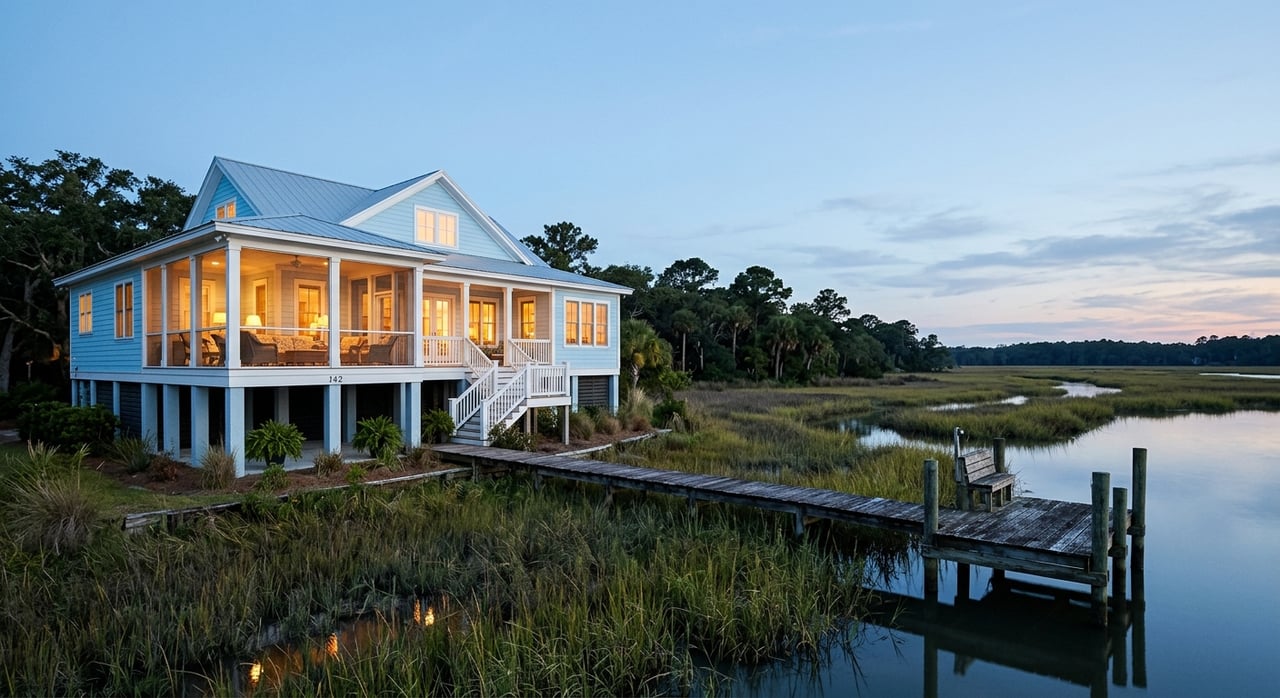
Barrier-island homes often sit in coastal V or A flood zones. That is why you frequently see elevated living levels, open pile foundations, engineered connections, and breakaway ground-level enclosures. These are not just aesthetic choices. They are best practices grounded in FEMA’s Coastal Construction guidance, which also recommends corrosion-resistant materials and details that shed water and reduce intrusion. For an overview of the core principles, see the FEMA Coastal Construction Manual.
Insurance must-knows
Flood coverage is separate from a standard homeowners policy. Most NFIP flood policies carry a typical 30-day waiting period unless a lender requires coverage at closing. Coastal policies often include separate hurricane or named-storm deductibles, usually shown as a percentage of your dwelling coverage. Some high-value homes layer excess or private flood coverage above NFIP limits. A local insurance specialist can walk you through options; this coverage overview and the Insurance Information Institute’s hurricane-season guide outline what to expect.
Design features that make island homes work
Screened porches with purpose
Large, covered screened porches are a Lowcountry essential. They expand your living space for most of the year, give you breezes without bugs, and create a natural link between kitchen, great room, and views. Look for ceiling fans, corrosion-resistant fixtures, durable decking, and porch orientation that balances sun, shade, and prevailing breezes. For visual ideas, browse these screened porch concepts.
Gear-smart entries and mudrooms
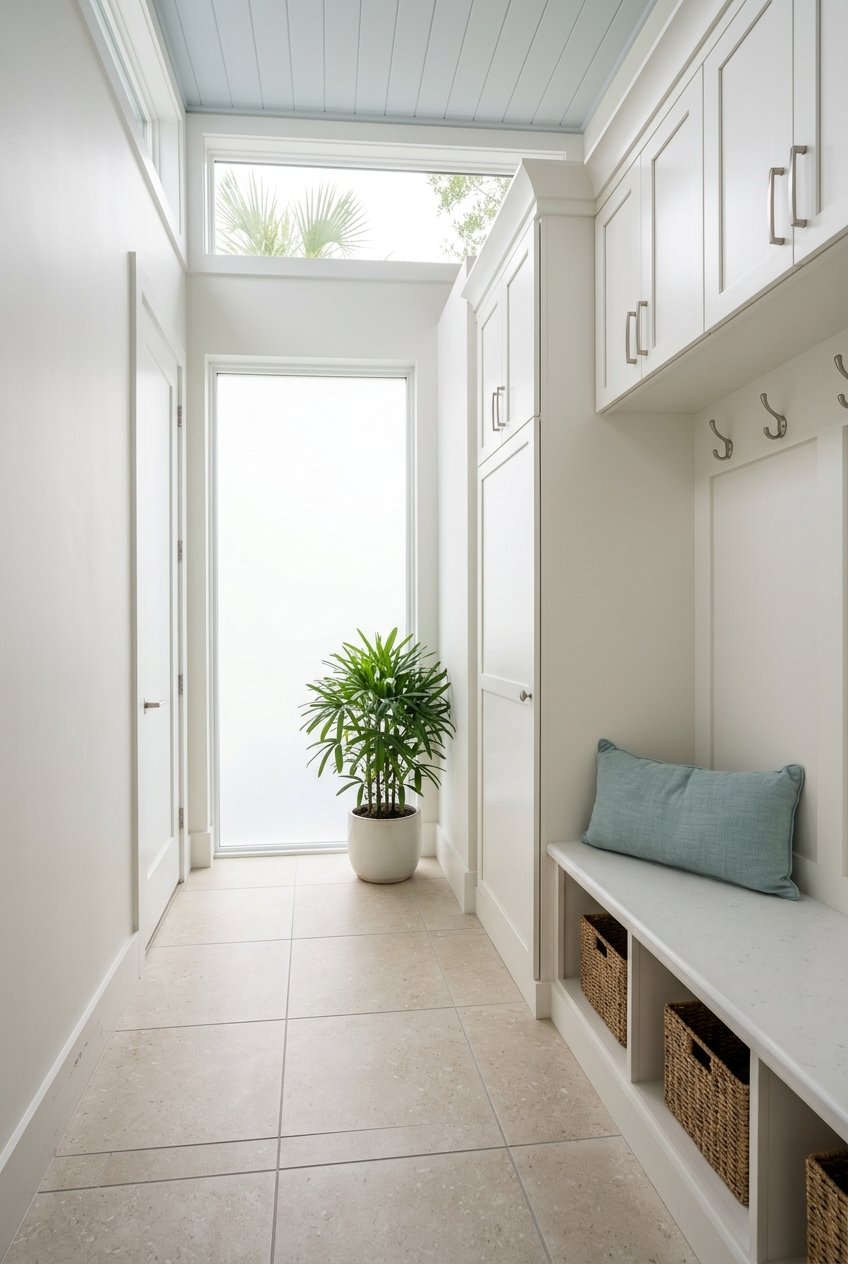
After a beach day or a paddle on the creek, a purpose-built mudroom keeps sand and salt from drifting through the house. Durable flooring, a rinse sink or hose connection, ventilated cubbies, and hooks for towels and wetsuits make cleanup quick. Place this near the service entry with direct access to the laundry so you can drop gear, wash hands, and reset in minutes.
Flexible sleeping, including bunk rooms
When family visits, sleeping flexibility is gold. A dedicated bunk room with built-ins, individual lights, and drawers under the beds maximizes capacity without adding square footage. It also boosts rental appeal if you plan to host short-term guests. Consider a nearby full bath and storage so the space functions well for kids and adults.
Chef-style kitchens and entertaining flow
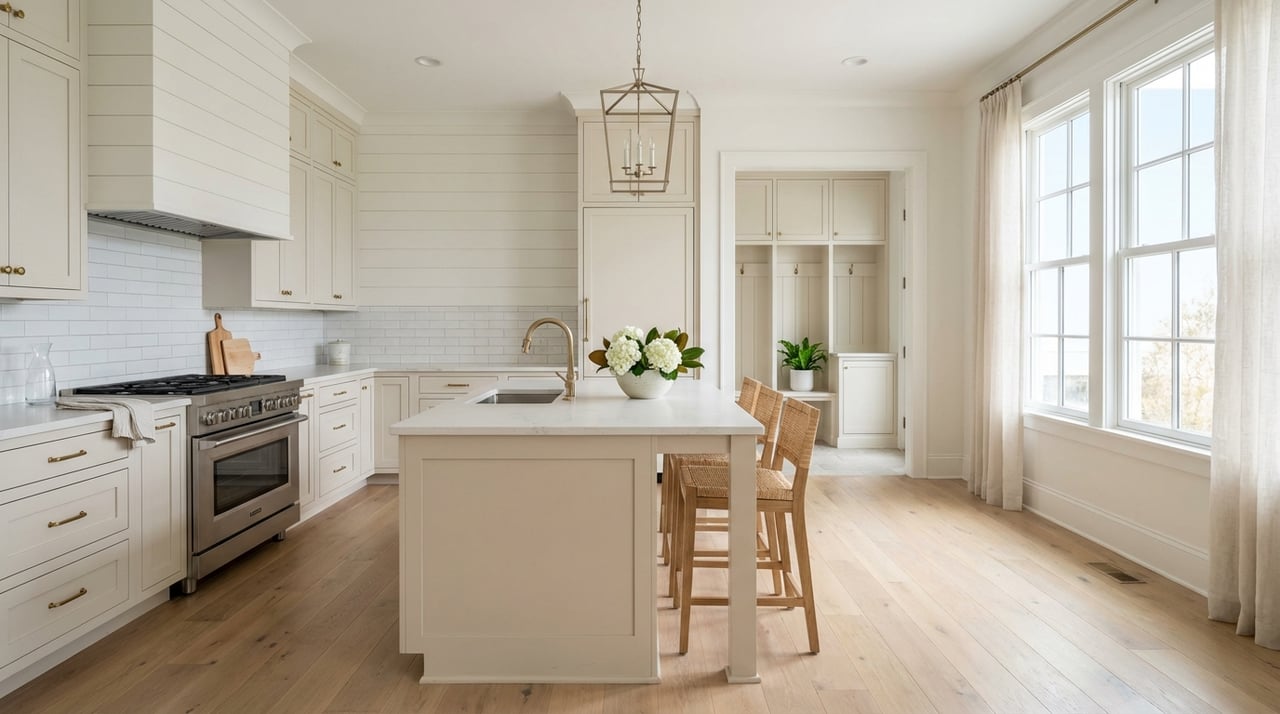
Island life runs through the kitchen. If you host holidays or long weekends, prioritize a big island with seating, a pro-style range or range plus wall ovens, generous refrigeration, and a walk-in or scullery pantry to keep prep out of sight. Plan separate zones for prep, cooking, plating, and service, and give the kitchen a direct connection to the screened porch for easy alfresco meals.
Durable, low-maintenance materials
Salt air and humidity accelerate wear. Favor corrosion-resistant and rot-resistant choices, such as stainless or hot-dip galvanized hardware, fiber-cement cladding, capped composite decking, and impact-rated windows or deployable shutters. Pair those with details that shed water, protect openings, and allow easy inspection. These selections reflect the same coastal construction principles used for foundations and wind loads.
Built-in resilience you can trust
Expect elevated main living levels in coastal V/A zones, impact-rated fenestration or shutters, mechanicals set above likely flood levels, and water-tolerant finishes on ground floors. Engineered connections and roof systems are designed to meet local wind and flood requirements. These elements improve safety, support insurability, and reduce long-term costs.
Site and floor plan choices
Oceanfront vs marsh or creek
Oceanfront lots offer broad views and direct beach access but face stronger wave action, erosion, and higher surge exposure, which can require higher elevations and more robust engineering. Marshfront or creek lots typically deliver quieter water, wildlife watching, and sunrise or sunset views with potential for dock access, but low parcels may see frequent tidal flooding. Use NOAA’s sea-level rise and inundation datasets to visualize exposure and trends as you compare sites. You can explore the core datasets through NOAA’s Sea Level Rise mapping resources.
Orientation and hosting flow
A hosting-friendly plan combines an open kitchen, dining, and great room with a porch or deck that acts like a second living room. Add a main-level guest suite for multi-generation visits and a flexible second living area for media or games. Keep a mudroom and laundry near the service entry so you can reset the house fast after beach time.
Parking and guest logistics
Parking and vehicle counts are regulated by island rules and rental programs. Some listings reference guidance like one car per bedroom as part of local enforcement, so confirm the current rule set for your property. A quick scan of island rental listings, such as this Seabrook example, shows how hosts communicate parking limits and amenity access for guests.
Aging in place without compromise
Many retreat buyers plan for long-term enjoyment. Thoughtful choices like a first-floor primary suite, a low-threshold shower, wider halls, and minimal steps at entries make everyday living easier without changing the look and feel of your home. These universal-design touches are modest investments that broaden resale appeal.
Quick checklist to move forward
- Confirm the parcel’s FEMA flood zone and base flood elevation, and note Seabrook’s two-foot freeboard requirement for living levels.
- Request a current elevation certificate and any substantial-improvement history from the seller.
- Review Seabrook or Kiawah membership structures, amenity access, and rental-guest procedures before you set your rental plan.
- Ask a local insurance specialist for NFIP and private flood quotes and for expected hurricane or wind deductibles; discuss excess-flood options if needed.
- Before you finalize finishes, check the HOA or ARB standards for setbacks, materials, and exterior colors.
- Screen long-term exposure with NOAA sea-level rise maps to compare oceanfront and marsh parcels.
Ready to design your retreat?
When you combine smart, coastal-ready construction with the right plan and lot, your Kiawah or Seabrook home becomes a low-stress base for everything you love to do. If you’d like help aligning your wish list, budget, and timeline with the realities of island building and ownership, we’re here to guide you one decision at a time. Schedule a conversation with The Tipple Team, and let’s map your next steps.
FAQs
What should I know about hurricane season before building on Seabrook or Kiawah?
- Hurricane season runs June 1 to November 30, with peak activity in late summer and early fall, so plan for impact-rated openings, elevated systems, and a storm plan.
How do Seabrook and Kiawah club rules affect my daily routine and guests?
- Memberships shape access to golf, racquets, pools, fitness, and sometimes guest usage and rental logistics, so review the structure that fits how you plan to use the home.
Why are so many island homes elevated on piles?
- Many parcels lie in coastal V or A flood zones, where open foundations, elevated floors, and breakaway elements reduce flood risk and support code and insurance requirements.
Do I need separate flood insurance for a Kiawah or Seabrook home?
- Yes, flood is not covered by standard homeowners insurance; NFIP or private flood policies are recommended for barrier-island properties, and NFIP typically has a 30-day wait.
Is an oceanfront lot better than marshfront for privacy and calm views?
- Oceanfront brings big views and direct beach access with higher exposure and costs, while marshfront offers quieter water and wildlife but may sit lower; compare BFE and long-term exposure before deciding.