What does a Daniel Island closing statement include that never shows up on the listing sheet?
Most buyers find out at the closing table: a line item called the neighborhood enhancement fee, typically 0.5 percent of the purchase price, paid to the Daniel Island Community Fund on top of the annual Property Owners Association dues. In Codner's Ferry Park, that fee is capped at $6,333, a ceiling that kicks in once a sale price passes roughly $1.27 million. In Daniel Island Park, buyers pay the same style of enhancement fee plus a separate estoppel fee to the Property Owners Association, with no published cap on either. Neither figure appears in the price you were quoted when you started searching.
That fee is a small example of a bigger pattern. Anyone comparing Daniel Island to other Charleston-area communities has probably seen a single median price quoted somewhere in the high six or low seven figures. That number is real, but it is also an average of several neighborhoods that behave nothing like each other. Treating Daniel Island as one market is like averaging the price of a bicycle and a boat and calling the result useful.
The median itself is a moving target
Even the headline number depends on who is measuring and when. Looking at the trailing three months through April 2026, one widely used index put the Daniel Island median sale price at $1.5 million, with homes taking 64 days to sell, up from 51 days the year before. A separate market analysis published in June 2026 put the median closer to $1.7 million to $1.8 million, citing a roughly 4 percent pullback from 2025's peak and days on market stretching to 70 to 73 days. Both are describing the same island in the same year.
The gap is not a mistake. It reflects which homes closed in which window and how each dataset weights waterfront and golf-frontage sales against interior lots. A quarter with several Daniel Island Park closings will pull the median up. A quarter weighted toward Codner's Ferry or the central sections will pull it down. The lesson for a buyer is not to distrust the number. It is to ask which neighborhoods are driving it before assuming it describes the house you are about to see.
One island, several very different products
Daniel Island is organized into roughly eight named sections, each with its own park, and each with a genuinely different housing stock.
| Section | Built | Character | What a recent snapshot of listings showed | Signature feature |
|---|---|---|---|---|
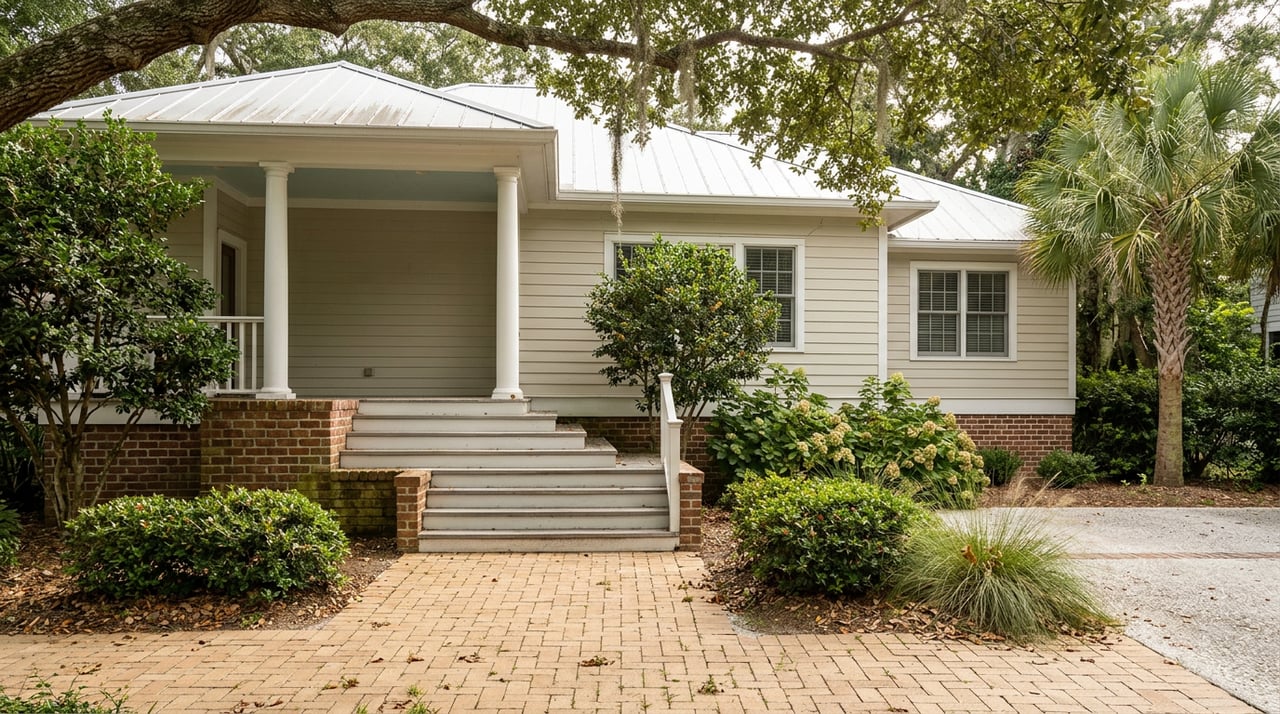
| Codner's Ferry Park | 1997 to 2002 | Daniel Island's original neighborhood, traditional Lowcountry cottages and patio homes on Beresford Creek | Homes typically ranged from $550,000 to $1.2 million earlier this year | Borders the Bellinger Island nature preserve and a private resident boat launch |
| Smythe Park | Mid-2000s through recent phases | Antebellum and Colonial-style homes built around a 24-acre park and 11-acre lake | A 2025 snapshot of ten active listings averaged just over $2.1 million, ranging from about $1.6 million to $2.6 million | Elevator-ready townhomes with rooftop decks facing the lake |
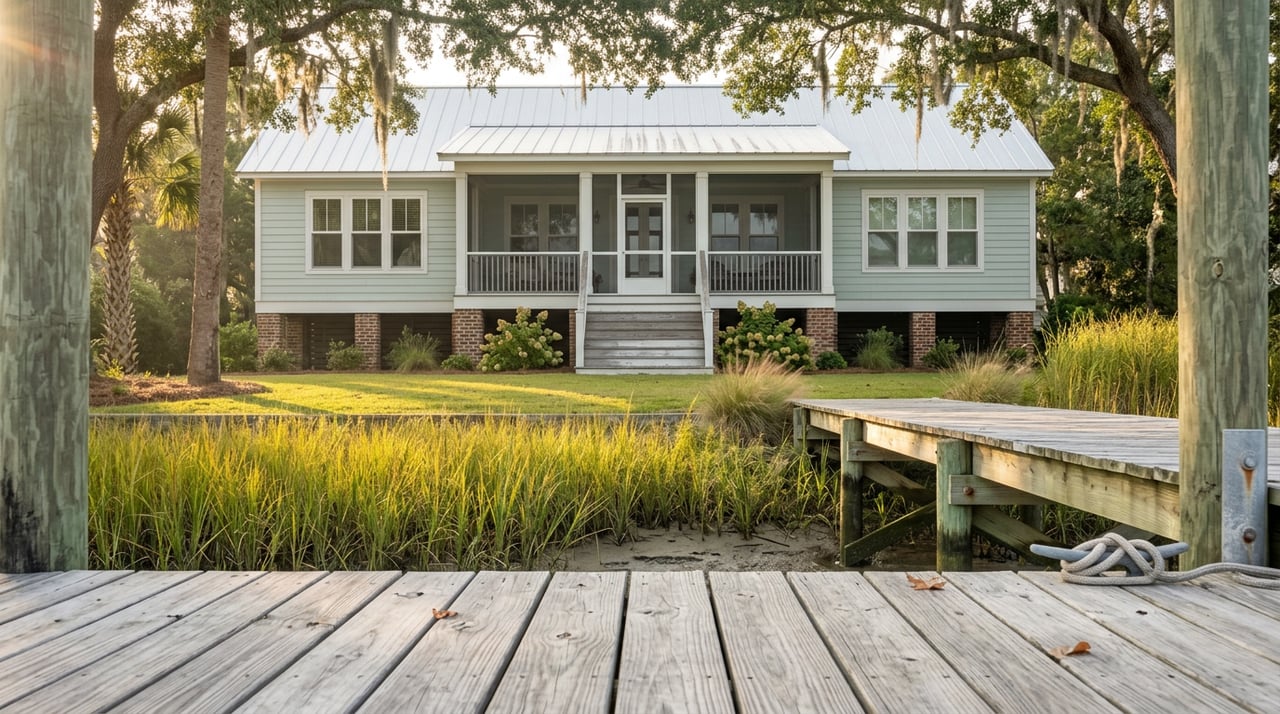
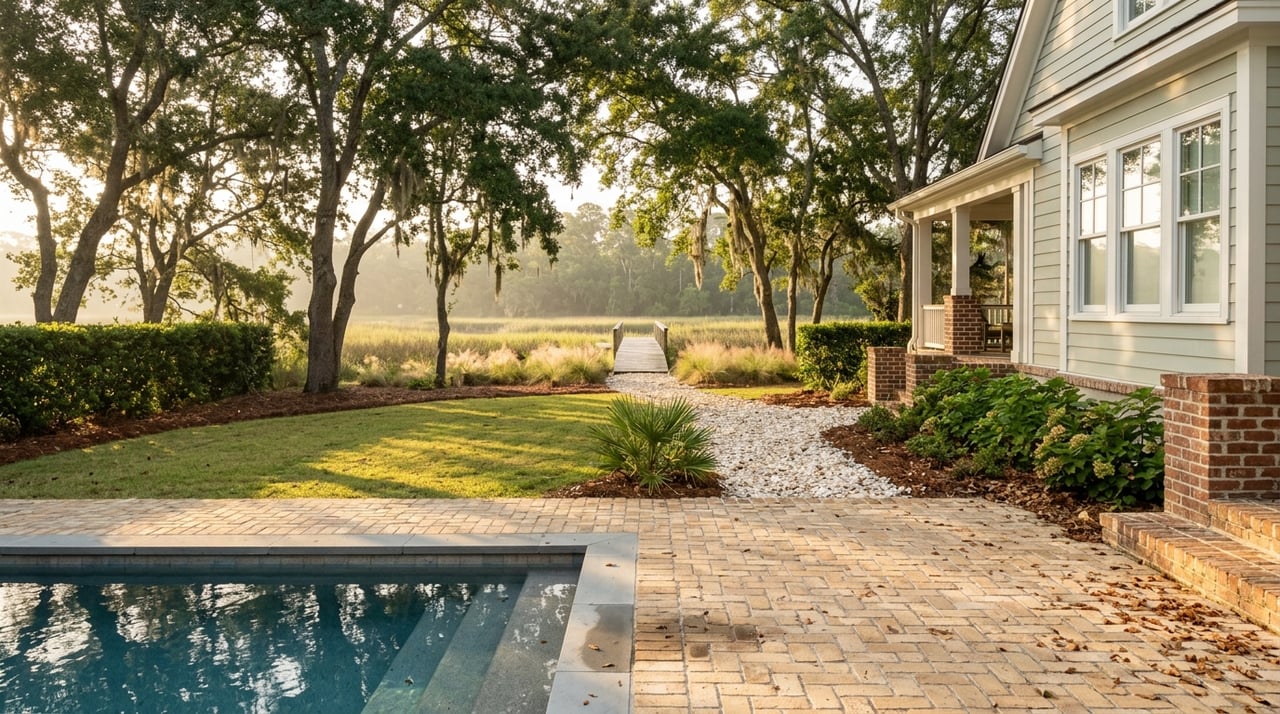
| Daniel Island Park, including The Retreat | Ongoing custom-build phases | The island's "Park side," golf-course and deepwater estates | Waterfront and golf-frontage homes commanding a 50 to 100 percent premium over interior lots | Home to the Daniel Island Club's Tom Fazio-designed Beresford Creek Course and Rees Jones-designed Ralston Creek Course |
| Etiwan Park, Barfield Park, Pierce Park, Center Park, Cochran Park | Built out through the 2000s and 2010s | Walkable central neighborhoods, a mix of single-family homes and townhomes near the town center | The broadest spread of price points on the island | Each has its own named park within a short walk of home |
Two houses under contract in the same month, one in Codner's Ferry and one in Daniel Island Park, might differ by a factor of three or four. A single median glosses over that entirely.
Why the fee structure gets complicated
The neighborhood enhancement fee is not the only cost layered on top of the sale price. Every owner also pays into the island-wide Property Owners Association, which runs roughly $800 to $900 a year and funds the trail network, community pools, parks, and ponds that give Daniel Island its walkable feel. On top of that, individual neighborhoods carry their own HOA dues for landscaping and amenities specific to that section. Buyers comparing a Codner's Ferry listing to a Smythe Park listing need to stack all three costs, not just the sale price, to compare apples to apples.
None of this is disclosed as a single number anywhere in a typical listing. It shows up piecemeal: the POA due in one document, the neighborhood HOA in another, the enhancement fee calculated only once a contract price is set. Codner's Ferry Park's fee cap of $6,333 lines up almost exactly with the neighborhood's own reported price ceiling of roughly $1.2 million earlier this year, so most buyers there end up paying close to the maximum fee no matter which home they choose. A buyer who budgets against the list price alone can be surprised by several thousand dollars in fees that were entirely predictable, just not consolidated.
Why the island itself is running out of room
Daniel Island's build-out is close to finished, and that scarcity is part of why the sub-neighborhood story matters more now than it did a decade ago. Beth Bush, president and co-founder of the Daniel Island Historical Society, moved to the island in 2003 when it had about 2,000 residents. She described those early years to the Post and Courier as feeling like "a postcard for coastal living," a place with a handful of restaurants and neighborhoods still waiting to be built. Charleston's Planning Department projected in 2025 that the combined population of Daniel Island and the neighboring Cainhoy peninsula would approach 20,000 that year, a number that has only grown since.
That growth has mostly moved off Daniel Island proper and onto Clements Ferry Road, where the Daniel Island News reported more than 2,200 new residences planned, under construction, or moving through city approvals as of late 2025. Communities like Point Hope on the Cainhoy peninsula are absorbing buyers who want the same walkable, park-centered feel at a lower price point than Daniel Island itself can now offer. The practical effect: Daniel Island's own inventory keeps tightening even as the wider peninsula adds thousands of new homes, which is part of why days on market have lengthened without prices actually softening much. Sellers are pricing carefully rather than testing the market with stretch numbers, and one recent analysis noted homes closing at roughly 3 percent below original asking price, a sign of room to negotiate that simply did not exist a few years ago.
What this means before you write an offer
If you are comparing Daniel Island neighborhoods, a few questions matter more than the headline median:
- Which section is this listing actually in, and does its recent sale history look like the island-wide number or nothing like it?
- What is the one-time neighborhood enhancement fee for this specific section, and is it capped?
- What are the annual dues, both the island-wide POA and any neighborhood-specific HOA, and what do they cover?
- Is the home on interior land or does it carry a waterfront or golf-frontage premium, and does that premium match what similar homes in that section have recently commanded?
Answering these before you tour a home saves a difficult conversation later, when a buyer who budgeted against a headline median discovers the real, section-specific number at the closing table.
A few common questions
Is the Park side always the most expensive? Generally yes. Daniel Island Park and The Retreat carry the island's highest prices because of golf-course and deepwater access, and waterfront lots there have commanded a 50 to 100 percent premium over interior lots in recent sales. But a golf-adjacent interior lot in Daniel Island Park can still cost less than a deepwater lot in Smythe Park, so the neighborhood label alone does not settle the comparison.
Does every neighborhood charge the same enhancement fee? The structure, a one-time fee of 0.5 percent of the sale price paid to the Daniel Island Community Fund, appears across multiple sections, though the specifics can vary by neighborhood and some carry a stated cap. Confirm the exact figure and any cap for the specific section before you write an offer.
Why has time on market gone up if prices haven't dropped much? More inventory relative to a few years ago, combined with buyers taking longer to complete due diligence on seven-figure purchases, has stretched the average sale from around 51 days a year ago to the mid-60s or low-70s depending on the dataset. That is a return to a more typical pace, not a sign of a cooling market.
Daniel Island rewards buyers who ask which neighborhood, not just which island. If you are trying to figure out what a specific section, price point, or waterfront lot actually costs once every fee is on the table, The Tipple Team can walk you through the real numbers for the section you're considering. Schedule a personalized consultation and we'll help you compare the parts of Daniel Island that the median price leaves out.